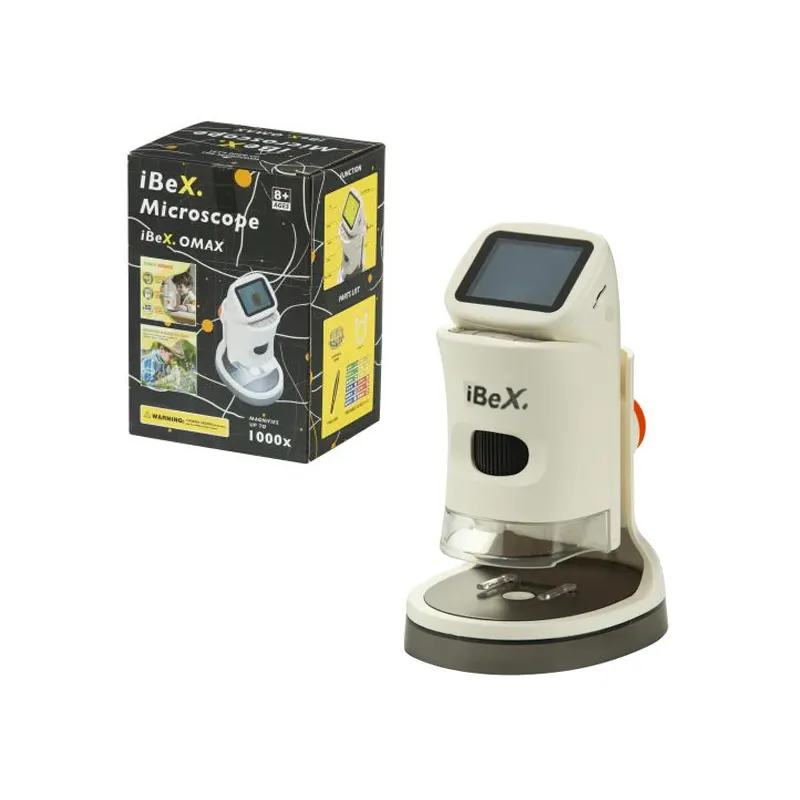
When deciding between microscope types for science educationpupils and faculty typically weigh the options ofa stereo microscope and a compound microscope
Each serves as a crucial device in scientific learningbut they serve very different purposes
Learning the core contrasts between these two microscope designsenables learners to match the device to their academic objectives
This type of microscope, often labeled as a dissecting modeldelivers an immersive, three-dimensional visualization of specimens
It uses two separate optical pathswhere each eye sees through its own lens setenabling the observer to detect texture, contours, and spatial structure
This makes it ideal for examining larger, opaque objectssuch as larvae, stems, ores, small hardware, or soldered joints
Educational settings frequently utilize them for cutting and examining specimensin geology to study mineral structuresor during electronics labs to assess circuitry and solder points
Magnification is usually limited to lower levelsoften spanning from 10x up to 50xyet it clearly shows texture, ridges, and intricate surface patternsso no slide preparation or thinning is needed
By comparison, a compound instrumentis engineered to reveal structures beyond human visual rangeand relying on high-level magnification
It operates via one optical channel equipped with several lensesenabling zoom levels from 40x to 1000x or beyond
When operating a compound microscope properlyspecimens must be thin and translucenttypically placed on slide coversand sometimes stained to enhance contrast
This makes it perfect for observing cells, bacteria, protozoa, and other microscopic organisms
Learners in advanced life sciences regularly utilize compound scopesexamining epidermal cells, oral epithelial samples, or ุฎุฑ��ุฏ ู…��ฺฉุฑู�ุณฺฉู�ูพ ุฏุงู�ุด ุขู…ู�ุฒ�� hematologic preparations
The capacity to toggle among magnification settingsfacilitates close examination of internal cell detailssuch as nuclei, chloroplasts, and cell walls
Lighting strategy is another key diverging factor
Stereo scopes predominantly illuminate from aboveshining light down onto the specimenwhich is ideal for opaque objects
Compound microscopes rely on transmitted lightthrough which light must penetrate the materialwhich is necessary for viewing transparent or semi-transparent samples
Thus, slide mounting becomes a necessary procedure for compound scopeswhile stereo microscopes allow for direct observation of unprepared specimens
For early learners or newcomers to scientific inquirythe stereo model tends to be easier and more captivating
It allows them to examine real world objects without complex preparationfostering curiosity and observation skills
When learners advance into higher-level biological coursesthe compound scope is indispensableto grasp the fundamental units of living organisms
Many educational institutions provide both types of microscopesto give students a well-rounded experience
Each has its own rightful place in educationeach excels in specific academic scenarios
Perfect for studying visible structures with depth perceptionit unlocks the microscopic universe beyond sight
Learners must evaluate the type of samples theyโ€�ll observeand the degree of magnification needed to make their choice
With knowledge of their distinct applicationsthey can select wisely to maximize educational outcomesand deepen their awe for biological and physical structures